
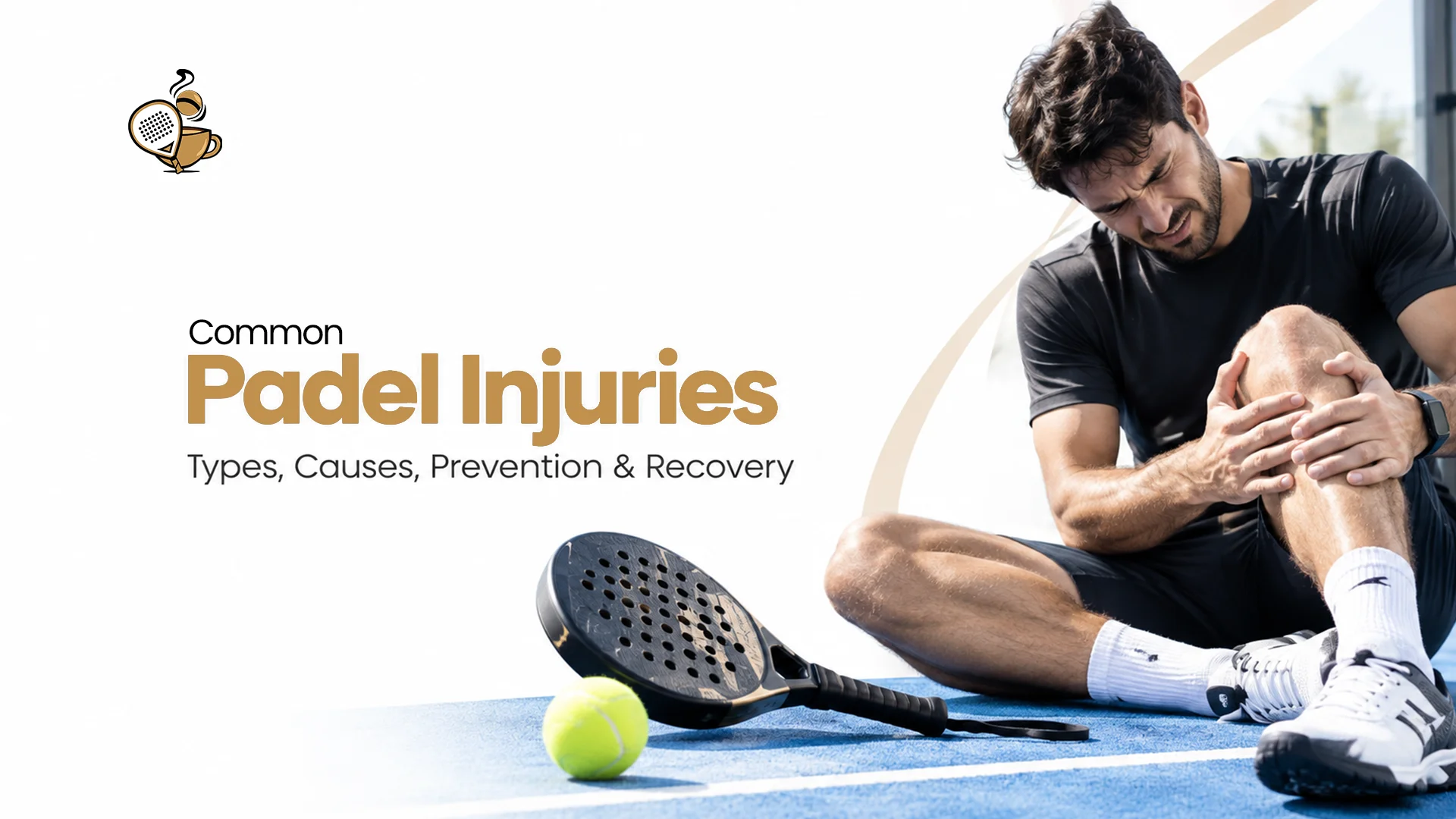
TL;DR
- The upper body takes the most strain, with padel elbow the single most common complaint.
- One 2025 study found a 44.6 percent injury rate in women versus 8.2 percent in men.
- Poor warm-ups, worn shoes, and the wrong racket drive most preventable injuries.
- Modern recovery follows PEACE and LOVE, which has largely replaced the old RICE method.
Padel looks gentle. The court is small, the rallies are social, and the walls do half the work. But ask anyone who plays twice a week, and a sore elbow or a tweaked ankle usually comes up. The sport is easy to start and surprisingly hard on the body.
That is not a reason to stop playing. It is a reason to play smarter. Most padel injuries are predictable, and most are preventable. Knowing what tends to go wrong lets you train around it.
This guide covers the injuries padel players see most, why they happen, and how to prevent them. We also walk through modern recovery, backed by recent research. Treat it as education, not a diagnosis. See a qualified professional for any injury that worries you.
What are the most common padel injuries?
The most common padel injuries affect the elbow, shoulder, wrist, knee, and ankle. Upper body problems lead the list. Overuse from repeated swings causes most of them, not single dramatic accidents.
Padel mixes quick sprints, sharp turns, and overhead smashes. That combination loads joints and tendons in short bursts. Over weeks, small stresses add up into real injuries.
Here is how the main injuries break down at a glance.
| Injury | Area | Type | Main cause |
|---|---|---|---|
| Padel elbow | Elbow | Overuse | Repeated impact and poor technique |
| Rotator cuff strain | Shoulder | Overuse | Overhead smashes |
| Wrist tendinitis | Wrist | Overuse | Gripping and ball impact |
| Patellar tendinopathy | Knee | Overuse | Lunging and direction changes |
| Ankle sprain | Ankle | Acute | Twisting on quick lateral moves |
| Muscle strain | Legs | Acute | Fast acceleration and stopping |
Why does padel put so much strain on the body?
Padel strains the body because it blends explosive movement with repetitive technique. Players stop, start, and twist constantly on a small court. The overhead smash and the backhand add heavy, repeated load to the upper body, which is also why a proper padel fitness routine matters as much as time on court.
Two injury patterns show up. Acute injuries happen in a moment, like an ankle rolling on a sharp turn. Overuse injuries build slowly from repeated stress, like a sore elbow after weeks of play.
The research backs this up. A 2025 scoping review reported padel injury rates of 3 per 1,000 training hours. In competition that rose to 8 per 1,000 matches. Most of those were overuse injuries, not accidents.
Expert tip: If a niggle returns every time you play, treat it as an overuse warning. Rest and reassess before it becomes a long layoff.
Padel elbow (lateral epicondylitis)
Padel elbow is the sport’s most common injury. It is a form of tennis elbow, where the tendons on the outer elbow become inflamed. Repeated impact from the ball travels through the racket into the forearm.
A stiff racket, a grip that is too small, and poor backhand technique all raise the risk. The pain starts as a dull ache on the outer elbow. Left alone, it can make gripping the racket painful. Our guide to padel racket pricing in Pakistan is a useful starting point if your current racket is part of the problem.
The fix is load management and forearm strengthening. Eccentric wrist exercises help the tendon recover. A softer racket and the right grip size reduce the strain at the source.
Shoulder injuries
The shoulder suffers from the overhead smash. Repeated overhead swings strain the rotator cuff, the group of muscles that stabilise the joint. Desk-bound posture during the week makes it worse.
Weak scapular muscles leave the shoulder poorly supported. Pain often shows during or after the smash motion. Players feel it when reaching overhead off the court too.
Resistance band work and scapular retraction exercises build support. Good posture through the week protects the joint. Warming up the shoulder before play matters more than most players think.
Wrist and hand injuries
The wrist takes impact from every ball strike and every grip adjustment. Tendinitis and general wrist pain are common, especially in players who grip too tightly. A death grip on the handle transmits more shock to the joint.
A relaxed grip absorbs more of the impact. The right grip size helps here as well, and the right padel accessories can make that adjustment easier. Wrist strengthening and mobility work round out the protection.
Knee injuries
The knee pays for constant lunging and direction changes. Patellar tendinopathy, pain just below the kneecap, is the usual complaint. Meniscus strain can follow sharp twists under load.
Strong quads and hamstrings protect the joint. Wall sits and controlled squats build that strength, and a few padel-specific exercises worked into your week go a long way. A proper warm-up primes the knee for the stop-start demands of a rally.
Ankle sprains
Ankle sprains are the most common acute padel injury. They happen when the foot twists during a fast lateral move. A damp or worn court surface raises the danger.
Court-specific shoes with good lateral support help a lot, and it is worth checking our roundup of the best padel shoes before your next purchase. Proprioception drills, like single-leg balance work, train the ankle to react. A wobble board session once or twice a week pays off.
Muscle strains
Hamstrings, calves, and quads strain from fast acceleration and hard stops. A cold muscle strains more easily than a warm one. This is where skipping the warm-up costs you.
Dynamic stretching before play prepares the muscles. Gradual progression in how often you play prevents overload. Hydration and recovery between sessions matter too.
Who is most at risk of padel injuries?
Injury risk in padel varies sharply by gender and preparation. One 2025 study of 305 players in Madinah found a 44.6 percent injury rate among women. Men in the same study showed only 8.2 percent.
The same research pointed to lifestyle factors behind the numbers. Stress affected 94.8 percent of respondents. Poor physical activity levels affected 75.7 percent, and dietary issues 72.8 percent. Inadequate warm-up was a recurring theme.
Upper body pain was the leading complaint across the board. It affected 42.2 percent of all participants. The takeaway is simple. Preparation and conditioning shape your risk more than the sport itself.
How can you prevent padel injuries?
You prevent most padel injuries with five habits: warm-up, strength work, the right shoes, the right racket, and smart recovery. None of them take long. Together they cut your risk sharply.
Start every session with a dynamic warm-up. Ten minutes of light cardio and mobility work is enough. Skipping it is the single most common preventable mistake.
Build strength two or three times a week. Focus on the core, legs, and shoulders. Balance drills protect the ankles and knees from awkward landings.
Expert tip: Match your racket and grip to your body, not the pros. A softer racket and correct grip size prevent more elbow pain than any brace.
Your gear matters as much as your training. Court-specific shoes with herringbone soles grip the surface and support lateral moves. The right racket and grip size protect the elbow and wrist. Replace worn shoes before the tread disappears.
How do you treat and recover from a padel injury?
Modern recovery for soft tissue padel injuries follows the PEACE and LOVE protocol. It has largely replaced the older RICE method. The shift reflects current sports medicine thinking on how tissue heals.
PEACE covers the first days after an acute injury. It stands for Protection, Elevation, Avoid anti-inflammatories, Compression, and Education. The surprising part is avoiding anti-inflammatory drugs early, since some inflammation aids healing.
LOVE guides the days that follow. It stands for Load, Optimism, Vascularisation, and Exercise. The idea is to reintroduce gentle movement and load early, rather than resting completely.
For overuse injuries like padel elbow, the approach differs. Load management and targeted strengthening lead the recovery. Eccentric exercises rebuild the tendon over weeks, not days.
Return to play only when you can move at match speed without pain. Rushing back is how a minor injury becomes a long one. Patience protects the rest of your season.
When should you see a physio or doctor?
See a professional when pain is sharp, persistent, or stops you playing normally. Some injuries need hands-on assessment that no guide can replace. Early treatment usually means a faster, fuller recovery.
Watch for these warning signs. Pain that wakes you at night, swelling that will not settle, a joint that gives way, or numbness all warrant a visit. Any inability to bear weight is a clear signal.
A physiotherapist can assess the injury and build a return-to-play plan. They tailor the recovery to padel’s specific demands. Mention how often you play and which shots trigger the pain.
What changed in 2025 and 2026 for padel injury care?
Two shifts stand out. First, padel injury research has grown fast, giving players real data instead of guesswork. Studies in 2025 mapped injury rates and risk factors for the first time at scale.
Second, recovery advice has moved on. The PEACE and LOVE protocol has replaced RICE as the standard for soft tissue injuries. The old habit of icing and resting completely is now seen as outdated for many cases.
The practical lesson is to load early and move smart. Complete rest is no longer the default answer. Gentle, progressive movement helps most soft tissue injuries heal better.
Frequently Asked Questions
What is the most common injury in padel?
Padel elbow, a form of lateral epicondylitis, is the most common injury. It comes from repeated ball impact and poor technique. The upper body in general takes the most strain among padel players.
How long does padel elbow take to heal?
Padel elbow recovery usually takes several weeks to a few months. It depends on severity and how early you start treatment. Load management and eccentric forearm exercises speed the process when done consistently.
Can I keep playing padel with a minor injury?
It depends on the injury type. Sharp or worsening pain means you should stop and rest. A minor niggle may allow light play, but ignoring overuse pain often turns small problems into long layoffs.
Is RICE or PEACE and LOVE better for padel injuries?
PEACE and LOVE is now the preferred protocol for soft tissue injuries. It has largely replaced RICE in sports medicine. The method favours early gentle movement and loading over complete rest and heavy icing.
How do I stop getting injured playing padel?
Warm up dynamically, strengthen your core and legs, and wear court-specific shoes. Choose a racket and grip that suit you. Progress your playing frequency gradually and allow proper recovery between sessions.
Why do women get injured more in padel?
One 2025 study found far higher injury rates in women than men. Researchers linked this to lifestyle factors like stress, low fitness, and poor warm-ups. Preparation and conditioning appear to matter more than gender itself.
Does my racket affect injury risk?
Yes, your racket strongly affects elbow and wrist risk. A stiff racket transmits more vibration into your arm. A softer racket and the correct grip size reduce the strain that causes padel elbow.
When should I see a physio for a padel injury?
See a physio for sharp, persistent, or worsening pain, swelling that will not settle, or a joint that gives way. Night pain and numbness also warrant a visit. Early assessment leads to faster recovery.
Play Padel, and Play It Safe
Padel is meant to be enjoyed for years, not cut short by avoidable injuries. The pattern is clear. Warm up, build a little strength, match your gear to your body, and recover properly.
At PadelCafe, we see players improve fastest when they play smart from the start. Good technique protects your body as much as it sharpens your game. Coaching early saves you from habits that cause injuries later.
Want to build a safer, stronger game? Explore our padel courts and coaching to learn proper technique from the ground up. When you are ready, book a court and play the smart way.


0 Comments