
TL;DR
- Basketball hoop types fall into four main categories: in-ground (most stable), portable (most flexible), wall-mounted (space-saving), and mini (kids/indoor).
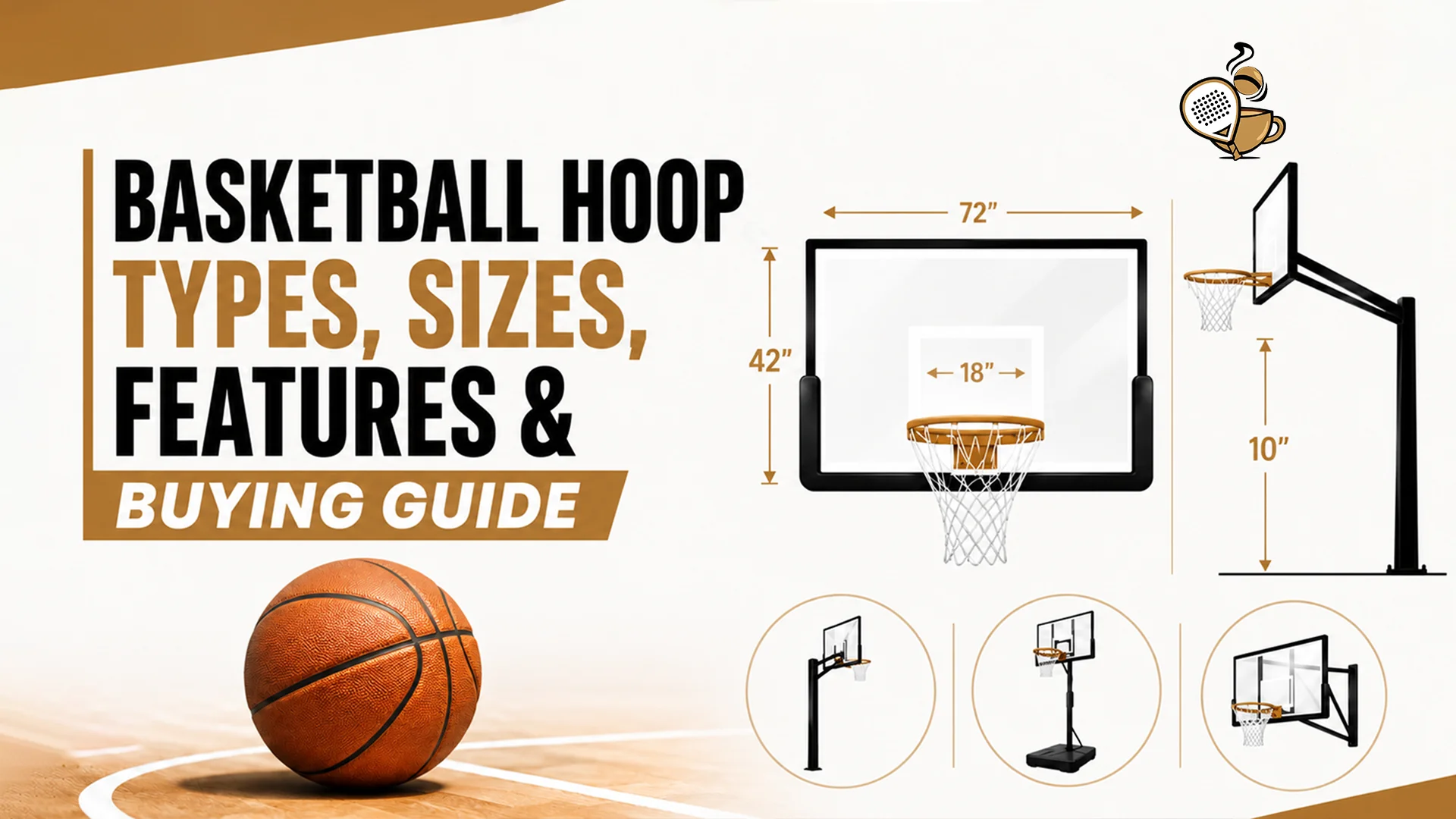
- Standard basketball hoop height is 10 feet (3.05 meters) for regulation play.
- Backboard materials range from polycarbonate (most durable) to tempered glass (best rebound) to acrylic (balanced).
- Breakaway rims flex under pressure during dunks, protecting the backboard and system.
- Portable hoops require weighted bases filled with sand or water for stability; sand is heavier and more stable but less mobile.
A basketball hoop transforms any driveway, backyard, or garage into a court. Whether you are a casual player shooting free throws after work, a parent encouraging your child’s interest in the sport, or a serious athlete training for competition, choosing the right hoop matters.
In Pakistan, the basketball gear market continues to grow, with increasing demand for quality hoops and backboards across both offline and online retail channels . But with so many options—portable vs. in-ground, polycarbonate vs. tempered glass, 44-inch vs. 60-inch backboards—it is easy to feel overwhelmed.
This guide breaks down everything you need to know about basketball hoops, including types, sizes, backboard materials, rim styles, and buying considerations specific to the Pakistani market. By the end, you will know exactly what to look for when shopping for the best basketball hoops in Pakistan.
Types of Basketball Hoops
Choosing the right basketball hoop starts with understanding the main types available. Each has distinct advantages based on your space, budget, and playing needs.
1. In-Ground Basketball Hoops
Best for: Serious players, competitive training, long-term installations.
In-ground basketball hoops are permanently installed by cementing the pole directly into the ground . This design offers the highest level of stability and durability, making them the preferred choice for serious players.
Pros:
- Extremely stable during aggressive play and dunking
- Larger backboard options available (up to 72 inches, regulation size)
- Gym-like performance and feel
Considerations:
- Requires installation (digging and concrete work)
- Permanent—cannot be moved once installed
- More expensive than other options
Poles for in-ground hoops come in two shapes: square poles offer better vibration control and stability, while round poles are usually more affordable.
2. Portable Basketball Hoops
Best for: Families, shared driveways, flexibility.
Portable basketball hoops are designed with a weighted base that can be filled with sand, water, or BaseGel . This style allows the hoop to be moved around the driveway, patio, or yard as needed.
Pros:
- Easy repositioning—ideal for shared spaces
- Flexible setup—no digging or permanent installation required
- Straightforward assembly
Considerations:
- May require seasonal storage during harsh weather
- Slightly less stable than in-ground systems during intense play
Weighting Tips: For stability, sand is denser than water and provides better anchoring. However, water can freeze in winter and crack plastic bases, so sand is the safer choice for year-round outdoor use.
3. Wall-Mounted Basketball Hoops
Best for: Saving driveway space, garages, limited areas.
Mounted basketball hoops attach directly to a garage wall, exterior wall, or roof. They offer better stability than portable systems but do not require the digging or concrete work of in-ground hoops .
Pros:
- Space-saving design—ideal for narrow driveways
- Stable and sturdy
- Good middle-ground choice between portable and in-ground
Considerations:
- Requires proper wall support and installation
- Fixed location—cannot be repositioned
- Some models are non-adjustable in height
4. Mini Basketball Hoops
Best for: Kids, indoor fun, skill-building.
Mini hoops are designed for younger players and indoor use. They typically mount over doors or on walls .
Pros:
- Affordable and easy to install
- Great for developing coordination and shooting form
- Can be used indoors or outdoors
Considerations:
- Not built for aggressive play
- Smaller backboard and rim size
- Limited durability
Quick Comparison: Types of Basketball Hoops
Type | Best For | Stability | Installation | Portability | Cost |
In-Ground | Serious players, competitive play | Highest | Permanent (cement) | None | Highest |
Portable | Families, shared spaces | Good | DIY assembly | Easy | Medium |
Wall-Mounted | Space-saving, garages | High | Wall installation | None | Medium |
Mini | Kids, indoor play | Low | Simple | Easy | Lowest |
Basketball Hoop Height
The standard basketball hoop height is 10 feet (3.05 meters) from the ground to the rim. This is the regulation height used in professional, collegiate, and high school play.
Height Adjustment Options
Many hoops feature adjustable height ranges, allowing players of different ages and skill levels to use the same system.
Player Age | Recommended Height |
Children under 6 | 6–7 feet |
Children 6–8 | 7–8 feet |
Children 8–12 | 8–9 feet |
Teens (12+) and Adults | 10 feet (regulation) |
Most adjustable hoops range from about 7.5 feet to 10 feet, allowing younger players to practice proper shooting form before transitioning to the regulation height.
Expert advice: Players should ideally move to a full-size 10-foot hoop at around 12 years old. Before this, lower hoops help with skill development and confidence.
In Pakistan, adjustable basketball stands for kids are increasingly available, with models featuring multiple height settings ranging from around 6 feet to 8.5 feet.
Basketball Backboards
The backboard is one of the most important components of a basketball hoop. The material and size directly affect how the ball bounces, the durability of the system, and your overall playing experience.
Backboard Materials
There are four main types of backboard materials, each with distinct characteristics.
1. Tempered Glass
Best for: Serious players, competitive training, gym-like performance.
Tempered glass is the material used in professional and collegiate gyms. It offers exceptional rebound, equivalent to indoor courts, and provides the most authentic playing experience.
Pros:
- Best rebound performance—ball bounces true and consistent
- Professional feel and look
- Ideal for players who want to transfer skills to competitive indoor environments
Considerations:
- Most expensive option
- Requires extra care—can crack or break if struck hard
- Heavier, requiring stronger support systems
2. Acrylic
Best for: High-level home play, balance of performance and durability.
Acrylic backboards provide a balance between durability and performance. They offer more rebound than polycarbonate systems and have a near-glass look.
Pros:
- Good rebound performance
- Lightweight and durable
- More affordable than tempered glass
Considerations:
- Not as durable as polycarbonate
- Bounce and spin may differ slightly from gym play
3. Polycarbonate
Best for: Durability, heavy use, aggressive play.
Polycarbonate is practically shatterproof and is the strongest of the backboard materials. It withstands heavy use and harsh weather conditions.
Pros:
- Extremely durable—virtually shatterproof
- Resists weather damage
- Good rebound performance
Considerations:
- Lacks the pure rebound feel of glass
- More expensive than basic plastic
Many polycarbonate backboards are reinforced with steel, providing enhanced rebound and higher-level performance.
4. Impact (HDPE) Backboards
Best for: Children, beginners, recreational play.
Impact backboards are made from High-Density Polyethylene (HDPE). They are durable, fade-resistant, and often printed with fun graphics appealing to younger players.
Pros:
- Most affordable option
- Durable and easy to maintain
- A lower rebound factor means the ball does not bounce too far on missed shots, which is, helpful for beginners
Considerations:
- Lowest rebound performance
- Not suitable for serious or competitive play
Backboard Size Guide
The size of the backboard affects both the playing experience and the space required.
Backboard Width | Best For | Typical Use |
44–54 inches | Younger players, smaller driveways | Kids, casual play |
54–60 inches | Families, recreational play | Home use, balanced performance |
72 inches | Regulation size, serious athletes | Competitive training, high school/pro level |
Pro tip: A 60-inch backboard offers a great midway point—saving space while still providing a larger surface for banking shots.
Basketball Rims and Nets
Basketball Rim Types
The rim is where the action happens. Understanding rim options helps you choose a system that matches your playing style.
Rim Type | Description | Best For |
Standard Fixed Rim | Rigid, non-flexible rim | Casual play, youth games |
Spring-Loaded/Breakaway Rim | Flexes under pressure when dunking; reduces stress on backboard | Competitive players, dunking |
Standard rim diameter: The official rim is 18 inches in diameter.
Basketball Nets
Nets attach to the rim and affect the game experience in several ways.
Net Type | Pros | Cons |
Nylon | Common, affordable, good ball control | May fray over time |
Chain Link | Long lifespan, durable | Can rust in wet weather |
All-Weather | Resists fraying and UV damage | More expensive than basic nylon |
Maintenance tip: Clean the net regularly and replace it promptly if damaged to ensure safe gameplay.
Basketball Hoop Buying Considerations in Pakistan
When shopping for basketball hoops in Pakistan, several practical factors deserve attention.
1. Space Requirements
Before buying a hoop, assess your available space. A flat, paved area such as a driveway is usually best.
Minimum space recommendations:
- Court width: At least 10–12 feet for comfortable play
- Clear height: No obstructions (branches, wires) above the hoop
- Run-off space: Enough room behind the baseline and beyond the sidelines for safe play
2. Climate and Weather
In Pakistan’s hot summers and monsoon rains, durability matters.
- Rust prevention: Choose hoops with rust-resistant coatings. Clean the metal frame regularly with a dry cloth and apply anti-rust paint periodically.
- UV resistance: Backboards and nets should resist UV damage. All-weather nets are recommended for long-term outdoor use.
- Storage: For portable hoops, consider storing the base indoors during extreme weather to protect it from cold and heat.
3. Installation Considerations
Hoop Type | Installation Complexity |
In-Ground | Requires professional installation (digging, cement) |
Portable | DIY assembly, no tools required for many models |
Wall-Mounted | Requires proper wall support and tools |
Mini | Simple, usually over-door or wall attachment |
For portable hoops, check whether the product requires weighting with sand or water. Many newer models can be assembled and stored in minutes without tools.
4. Where to Buy in Pakistan
The best basketball hoops in Pakistan can be found through:
- Local sports retailers in major cities (Lahore, Karachi, Islamabad)
- Online marketplaces with delivery across Pakistan
- Specialized kids’ toy stores for mini and adjustable stands
Popular models for children in Pakistan include height-adjustable basketball stands that can be used indoors and outdoors, featuring durable materials and stable bases.
Maintenance and Care
Proper maintenance extends the life of your basketball hoop. Follow these tips for long-term durability.
Regular Maintenance Checklist
Component | Maintenance Action | Frequency |
Metal frame | Wipe with dry cloth; apply anti-rust paint if needed | Monthly |
Nylon net | Hand wash with mild detergent; air dry | As needed |
Backboard | Clean with damp sponge and mild soap; rinse with water | Monthly |
Portable base | Check for leaks; top up sand/water as needed | Seasonally |
Pole connections | Tighten bolts and hardware | Every 3–6 months |
Weather Precautions
- Strong winds: Lay the hoop down or fold it away to prevent damage.
- Rain: Cover the hoop with a tarp to protect metal components from rust.
- Freezing: If using water in the base, avoid freezing conditions—sand is the safer year-round option.
Conclusion
A basketball hoop is an investment in fitness, fun, and family time. Whether you choose an in-ground system for competitive play or a portable model for flexibility, understanding the types, sizes, and features helps you make the right decision.
- In-ground hoops offer maximum stability for serious players.
- Portable hoops provide flexibility for shared spaces.
- Backboard materials range from affordable plastic to premium tempered glass; choose based on your level and budget.
- Height adjustment is essential for growing children.
- Regular maintenance ensures your hoop lasts for years.
The basketball gear market in Pakistan continues to grow, offering more options than ever before. Whether you are setting up a basketball court in your driveway or training for competition, the right hoop makes all the difference.
Ready to play? Visit Padel Cafe for expert advice on choosing the best basketball hoop for your home or training needs.
Frequently Asked Questions
How high is a standard basketball hoop?
The standard basketball hoop height is 10 feet (3.05 meters) from the ground to the rim. This is the regulation height for professional, collegiate, and high school play.
What is the standard basketball hoop size?
The standard rim diameter is 18 inches. Regulation backboards measure 72 inches wide and 42 inches tall, though smaller sizes (44–60 inches) are common for home use.
What are the different types of basketball hoops?
There are four main types: in-ground (permanent, cemented), portable (movable, weighted base), wall-mounted (attached to a wall or garage), and mini (small, for kids/indoor use).
Is an in-ground or portable basketball hoop better?
It depends on your needs. In-ground hoops offer maximum stability and performance but are permanent. Portable hoops are flexible, easy to move, and ideal for shared spaces, but slightly less stable.
How high should a basketball hoop be for children?
- Under 6 years: 6–7 feet
- 6–8 years: 7–8 feet
- 8–12 years: 8–9 feet
- 12+ years: 10 feet (regulation)
Can an indoor basketball hoop be used outdoors?
Generally, no. Indoor hoops are not built to withstand weather exposure. Outdoor hoops feature rust-resistant coatings and UV-protected materials that indoor models lack.
How much space do you need for a basketball hoop?
Minimum recommended space: 10–12 feet width for the playing area, plus 3–5 feet of clearance behind the baseline and beyond the sidelines for safe movement.
What material is best for a basketball backboard?
- Tempered glass: Best performance, pro feel, expensive
- Acrylic: Good balance of performance and durability
- Polycarbonate: Nearly shatterproof, most durable
- HDPE/Impact: Affordable, best for beginners/kids
How do you install an in-ground basketball hoop?
Installation involves: (1) digging a hole (approx. 3–4 feet deep), (2) setting the pole in concrete, (3) allowing the concrete to cure (48+ hours), and (4) attaching the backboard and rim. Professional installation is recommended.
How long does a basketball hoop last outdoors?
With proper maintenance, a quality outdoor hoop can last 5–10+ years. Regular cleaning, rust prevention, and weather protection extend its lifespan significantly.


0 Comments