
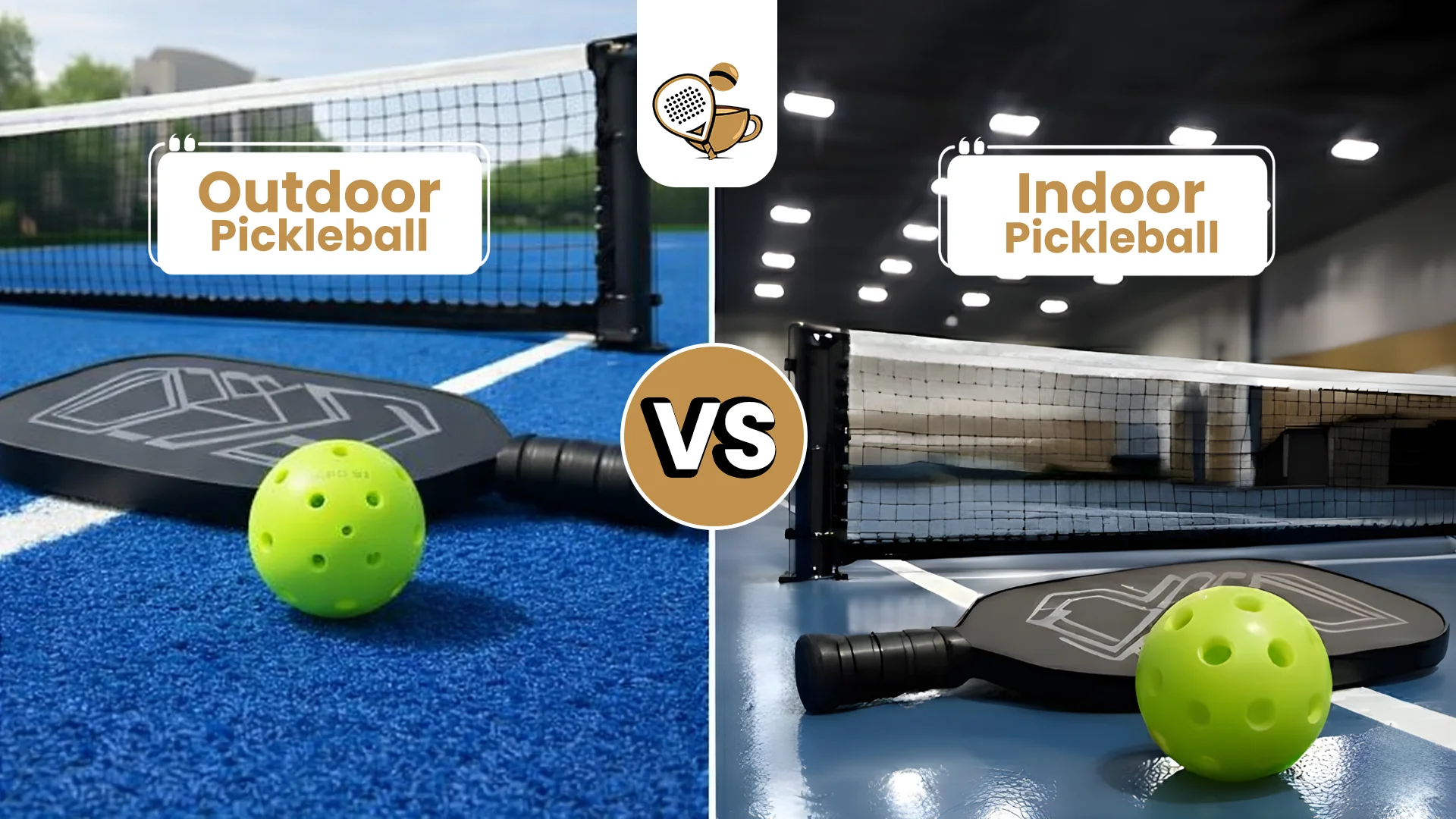
Step onto any pickleball court in 2026, and you’ll feel it instantly — the energy, the fast rallies, the pop of the pickleball paddle.
Today, pickleball celebrates its status as one of the fastest-growing racket sports in the world, just like padel. What was once a quiet community sport has turned into a global thrill. But here’s what most new players don’t realize: the ball you choose can completely change your game.
A rally that feels smooth indoors may feel faster and more powerful outdoors — even with the same paddle. That difference comes down to a simple choice: indoor vs. outdoor pickleball balls. Choosing the wrong one can affect bounce, speed, and even your control.
In this complete 2026 guide, we’ll break down the indoor and outdoor pickleball balls, so you can always play with the right ball, in the right place.
Understanding Indoor vs Outdoor Pickleball
Before comparing features, it’s important to understand why two types of balls exist in the first place.
Pickleball is played on different surfaces that differ between indoor and outdoor courts.
- Indoor courts are usually smooth wooden gym floors.
- Outdoor courts are often rough asphalt or concrete.
These surfaces react differently to the ball. Wind also plays a role outside, while indoor games are protected from the weather.
Because of these differences, manufacturers design two separate balls to match the playing environment.
What Are Indoor Pickleballs?
Indoor pickleballs are designed for smooth surfaces and controlled environments. These balls are usually lighter and made of softer plastic.
The most noticeable feature: The balls have 26 larger holes on the surface. These larger holes reduce air resistance and help the ball move smoothly in an indoor setting with limited airflow.
Because the ball is lighter, it travels slightly slower. This gives players more time to react and control their shots. Rallies often feel longer and softer indoors. Many beginners prefer indoor balls because they are easier to manage.
What Are Outdoor Pickleballs?
Outdoor pickleballs are built for tougher conditions, as they are intended for outdoor play in potentially harsh environments.
- The balls are heavier and harder compared to indoor balls.
- The 40 holes are smaller and more numerous.
- The balls are more durable as the courts are rougher.
- Outdoor balls often produce a livelier and more consistent bounce on hard surfaces due to their harder construction.
This design helps the ball handle wind better and maintain a stable flight in outdoor conditions. They can withstand hard surfaces such as concrete without cracking quickly. This makes outdoor games feel more powerful and slightly more challenging.
Indoor vs Outdoor Pickleballs: Key Differences
The following table features the key differences between the two types of pickleball balls:
Feature | Indoor Pickleballs | Outdoor Pickleballs |
Playing Surface | Designed for smooth gym floors and wooden courts | Designed for rough concrete and asphalt courts |
Hole Design | Larger holes, fewer in number (26) | Smaller holes, more in number (40) |
Weight | Lighter | Slightly heavier |
Material Feel | Softer plastic | Harder, more rigid plastic |
Speed of Play | Slightly slower, controlled rallies | Faster pace, more powerful shots |
Bounce | Softer, lower bounce | Higher and more lively bounce |
Wind Resistance | Not suitable for windy conditions | Built to handle wind better |
Durability | Can crack faster outdoors | More durable on rough surfaces |
Sound | Quieter during play | Louder “pop” sound on contact |
Best For | Beginners, control-focused players, indoor leagues | Competitive outdoor matches, windy conditions |
Now let’s clearly break down the main differences so you can easily understand pickleball balls indoors vs outdoors.
1. Material and Hardness
Outdoor pickleballs are made from harder plastic to survive rough concrete courts and changing weather. Indoor balls use softer plastic, which feels smoother and more controlled on wooden gym floors.
2. Surface Compatibility
Indoor balls work best on smooth indoor courts. Outdoor balls are specifically built for asphalt or concrete surfaces and perform better on textured ground.
3. Wind Resistance
Outdoor pickleball balls are designed to stay stable and usable in windy conditions. On the other hand, indoor balls are lighter and can drift easily if used outside.
4. Control vs Power
If you see better control in the game and like longer rallies, indoor pickleball balls should be your top choice. Outdoor balls generate more speed and power, making the game feel faster and more aggressive.
5. Cost and Replacement
If you’re someone who likes playing on hard courts, consider choosing outdoor balls. These balls usually last longer on hard courts, although they cost slightly more. Indoor balls are designed for comparatively soft surfaces. Hence, these may wear out faster if used on rough outdoor surfaces.
How to Identify Indoor vs Outdoor Pickleball Balls
Many new players ask: How to identify indoor vs outdoor pickleball balls?
Here are simple ways to identify them:
- First, check the holes. If the holes are large and fewer in number, it is likely an indoor ball. If the holes are small and many, it is probably an outdoor ball.
- Second, feel the ball’s weight. Outdoor balls feel slightly heavier in your hand.
- Third, press the ball gently. Indoor balls feel a bit softer compared to the tougher outdoor versions.
Most manufacturers also clearly label the ball type on the packaging, which makes identification easier.
Why Using the Right Ball Matters
Some players think any ball will work anywhere. While technically you can play that way, it affects performance. In pickleball tournaments, specific ball types are usually required. So understanding pickleball balls outdoor vs indoors is not just helpful — it is essential.
1. Performance and Game Quality
Using an indoor ball outdoors makes it unstable in windy conditions and more likely to crack on rough concrete. Conversely, using an outdoor ball indoors can make rallies too fast and difficult to control due to its hard material and added weight.
2. Player Skill Development
Practicing with the correct ball helps players build proper timing, shot accuracy, and consistency. Using the wrong ball regularly can negatively affect technique and slow long-term skill improvement.
3. Equipment Protection
Outdoor balls are less soft and can cause faster wear on paddles if frequently used indoors. Choosing the right ball helps extend paddle lifespan and maintain consistent performance.
4. Court Surface Preservation
Indoor courts, especially wooden or synthetic floors, can slightly alter play characteristics when outdoor balls are used. The proper ball protects the playing surface and maintains court quality.
5. Fair Play in Competitive Matches
Most leagues and tournaments specify the type of ball allowed. Using the correct ball ensures fair competition, standardized bounce, and consistent playing conditions for all players.
Popular Pickleball Ball Options in 2026
Several well-known brands continue to dominate the pickleball market in 2026, producing balls designed for specific playing environments and skill levels.
1. Dura Fast 40 (Outdoor)
The Dura Fast 40 remains one of the most widely used outdoor balls in competitive tournaments. Known for its fast pace and harder construction, it performs well on concrete courts and in professional-level play. Advanced players often prefer it because it creates a quicker, more aggressive game.
2. Franklin X-40 (Outdoor)
The Franklin X-40 is another highly trusted outdoor option. It offers a balanced combination of durability, consistent bounce, and a slightly softer feel compared to the Dura. Many clubs, recreational leagues, and tournaments officially use X-40. They prefer it for its reliability and longer lifespan.
3. Onix Fuse Indoor (Indoor)
For indoor courts, the Onix Fuse Indoor is a popular choice. It features larger holes and a softer plastic construction, allowing for better control and smoother rallies on gym floors. It is especially favored by players who prioritize accuracy and touch shots.
Wrapping Up
Choosing between outdoor and indoor pickleballs becomes much easier once you understand their core differences. Small details like hole size, weight, durability, and court surface directly affect how the ball moves, bounces, and feels during play.
If you want better control, a consistent bounce, and a more enjoyable experience, always match the ball to your playing environment. With pickleball continuing to grow rapidly in 2026, understanding these differences gives you a real advantage every time you step onto the court.
Frequently Asked Questions
How many holes are in a pickleball ball?
A USA-Pickleball-approved pickleball ball must have between 26 and 40 holes, although the exact number will vary depending on the manufacturer and the model. Outdoor pickleballs will typically have a higher number of smaller holes when compared to indoor balls.
How do you know if a ball is used indoor or outdoor?
Outdoor balls are typically hard and heavier with more holes. They also travel faster than indoor balls and are made to survive winds, weather, and tougher courts (even though they don’t always survive!). Indoor balls have fewer holes, are lighter and softer than outdoor balls.
Can I use my indoor ball outside?
Using outdoor pickleball balls on an indoor court can make dribbling on a slippery wood surface difficult. Using your indoor ball outside can damage the ball.


0 Comments