
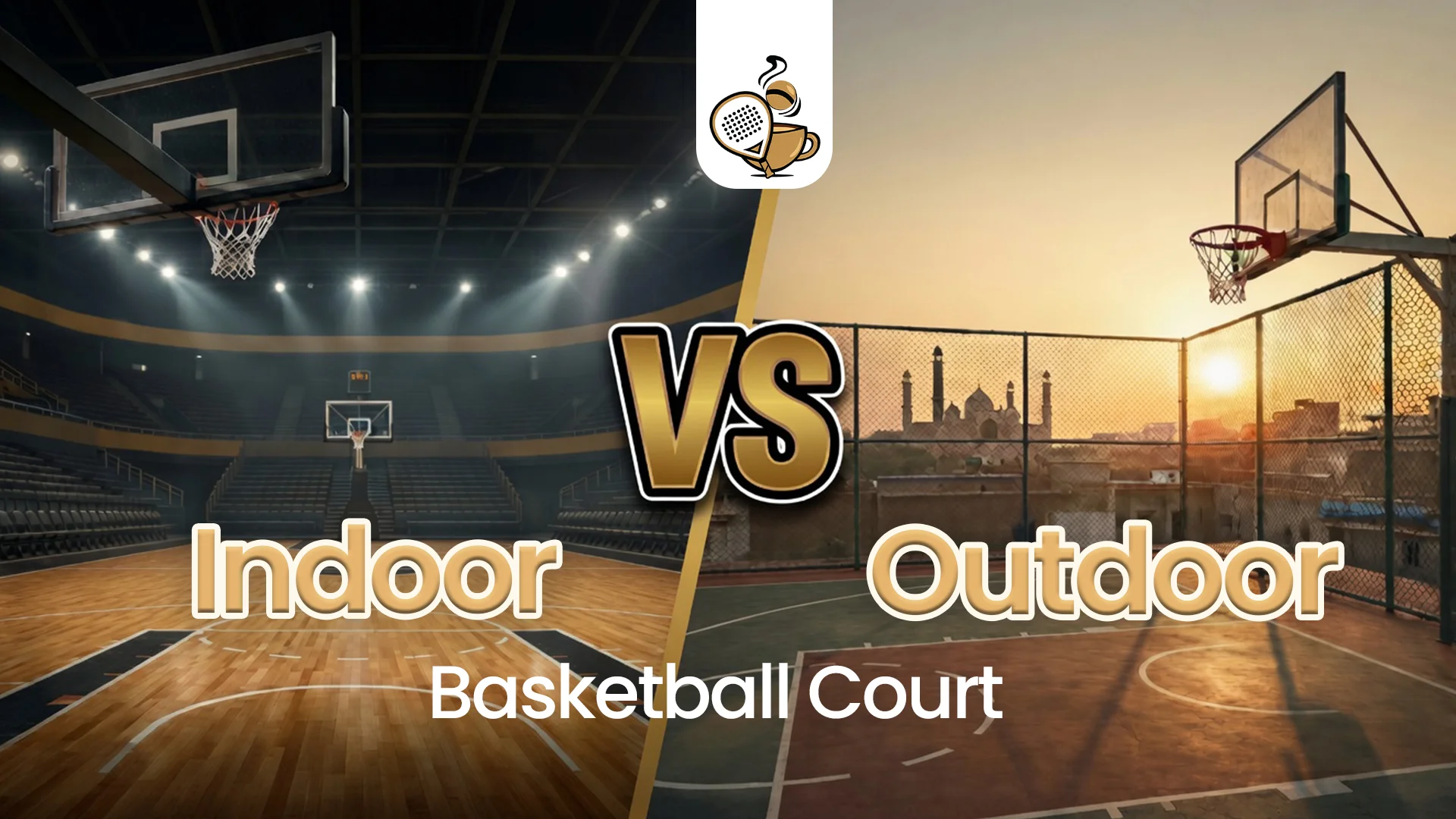
The environment in which a game is played significantly impacts the way the match is played and its outcome. This fact stands true for all court games, including basketball.
Today, basketball is one of the most widely played ball games across the globe, with over 450 million professional and best basketball players. People tend to play this game just about anywhere where they can fix a pole with a basket. However, professional basketball is always played on a dedicated basketball court.
But one question often comes up for players, schools, and facility owners: Should you choose an indoor basketball court or an outdoor basketball court? The answer is not as simple as it seems. Each type of court offers a completely different playing experience, cost structure, and long-term value.
Whether you are building a court at home, upgrading a sports facility, or simply curious about which option delivers better gameplay, understanding the key differences is essential. This guide breaks down everything, so you can make the best decision based on your needs, budget, and playing style.
Indoor Basketball Court: The Basics
Before comparing indoor and outdoor options, it’s important to understand what an indoor basketball court actually includes.
An indoor basketball court is built within a covered facility such as a gymnasium, sports complex, or school hall. Because it is protected from weather conditions like rain, wind, and extreme heat, it offers a controlled environment for consistent gameplay.
These basketball courts are commonly used for professional matches, training sessions, and recreational play.
Indoor Basketball Court Surface
Indoor courts typically feature high-quality hardwood flooring, most commonly maple wood. This surface provides excellent grip, shock absorption, and a consistent ball bounce, allowing for faster, smoother, and more controlled gameplay.
Some modern facilities may also use synthetic flooring for added durability and lower maintenance.
Indoor Basketball Court Size
Standard indoor court dimensions based on international (FIBA) guidelines:
- Full-size court: 28 meters (length) × 15 meters (width) – ~92 × 49 feet
- Three-point line distance: 6.75 meters (22.15 ft) from the basket
- Free-throw line distance: 4.6 meters (15.09 ft) from the backboard
- Recommended ceiling height: 7 meters (23 feet) or higher
- Half-court option: 14 × 15 meters for smaller spaces
The court sizes are also slightly customized based on the facility where it’s being built, i.e., for schools, homes, and training facilities
Key Advantages of Indoor Courts
Indoor courts offer several important benefits:
- Weather protection for year-round usability.
- Consistent playing conditions without wind or surface changes.
- Longer surface lifespan due to reduced exposure.
- Better performance for competitive and professional games.
- Enhanced player safety with controlled flooring conditions.
Outdoor Basketball Court: The Fundamentals
Now, let’s look at the outdoor basketball court and how it differs in structure and experience.
An outdoor basketball court is built in open areas such as parks, schools, or backyards.
Outdoor Basketball Court Surface
Outdoor courts typically use hard, durable materials such as concrete or asphalt. These surfaces are built to withstand weather conditions like rain, heat, and dust, making them suitable for long-term outdoor use.
However, compared to indoor hardwood courts, outdoor surfaces are rougher and offer less shock absorption, which can impact player comfort and ball control.
Outdoor Basketball Court Dimensions
Outdoor basketball court dimensions generally follow international (FIBA) standards but are often more flexible depending on available space:
- Full-size court: 28 meters (length) × 15 meters (width) – ~92 × 49 feet
- Three-point line distance: 6.75 meters (22.15 ft) from the basket
- Free-throw line distance: 4.6 meters (15.09 ft) from the backboard
- Half-court option: 14 × 15 meters, commonly used in parks and residential areas
Outdoor basketball court dimensions are usually similar to indoor courts, but they can vary more depending on space. Many outdoor courts are half-courts or custom-sized.
Key Advantages of Outdoor Courts
Outdoor basketball courts offer several practical benefits:
- Easy accessibility in public places like parks and schools.
- Lower construction and maintenance costs compared to indoor courts.
- Suitable for recreational play and casual games.
- No requirement for enclosed structures or roofing.
- Encourage community engagement and outdoor physical activity.
Indoor and Outdoor Basketball Courts: Key Differences
Understanding these differences can help you choose the best basketball court based on performance, budget, and long-term use.
1. Playing Experience and Comfort
Indoor courts provide a smooth, controlled playing environment with consistent ball bounce and better traction. This allows for faster gameplay and improved player performance.
Outdoor courts offer a more variable experience. Factors like uneven surfaces, wind, and dust can affect movement and ball control. However, they are often preferred for casual play and a more natural, open-air feel.
2. Weather and Environmental Impact
Indoor basketball courts are fully protected from weather conditions, allowing uninterrupted play throughout the year. Temperature and lighting can also be controlled for optimal comfort.
Outdoor courts are directly exposed to the weather. Rain can make surfaces slippery, while heat and sunlight may affect player comfort and court usability.
3. Maintenance and Durability
Indoor courts require regular maintenance such as cleaning, polishing, and surface care, especially hardwood flooring. Proper upkeep is essential to maintain performance and safety.
Outdoor courts are structurally durable and built to handle environmental exposure. However, they may develop cracks or surface wear over time and require periodic repairs.
4. Cost and Investment
Indoor basketball courts involve a higher initial investment due to construction costs, including roofing, flooring, lighting, and ventilation systems.
Outdoor courts are more cost-effective, as they do not require enclosed structures and have lower installation and maintenance costs.
5. Accessibility and Usage
Indoor courts are often located in private facilities, gyms, or sports complexes, which may limit access or require membership.
Outdoor courts are widely accessible in public parks, schools, and residential areas, making them ideal for community use and casual play.
Price Comparison: Indoor vs Outdoor Basketball Court
Understanding the price comparison helps you plan your budget effectively.
Cost Factor | Indoor Basketball Court | Outdoor Basketball Court |
Base Construction Cost | PKR 5,000,000 – PKR 20,000,000+ | PKR 500,000 – PKR 3,000,000 |
Flooring / Surface Cost | High (hardwood or synthetic flooring) | Low to moderate (concrete or asphalt) |
Roofing / Structure | Required (major cost factor) | Not required |
Lighting Setup | Essential indoor lighting system | Optional (basic floodlights if needed) |
Maintenance Cost (Yearly) | High (polishing, cleaning, repairs) | Low to moderate (crack repairs, repainting) |
Customization Cost | High (seating, indoor design, branding) | Low (basic markings and hoops) |
Note: The prices listed are estimated ranges based on current market trends in Pakistan (2026). Actual costs may vary depending on location, materials, court size, labor charges, and customization needs. Additional features such as lighting, seating, and maintenance may also affect the final budget. It is recommended to consult a professional contractor for accurate pricing.
Indoor vs Outdoor Basketball Court: Performance Comparison
Let’s look at how both courts affect player performance on the court.
Ball Control and Speed
Indoor courts offer better ball control due to smooth surfaces. This allows for faster gameplay and more precise movements.
Outdoor courts slow the game slightly due to rough surfaces, which can affect dribbling and passing.
Player Safety
Indoor courts are generally safer because of softer surfaces and controlled environments.
Outdoor courts can be harder on joints and increase the risk of minor injuries due to rough ground.
Basketball Courts: Pros and Cons
To make decision-making easier for you, let’s break down the advantages and disadvantages of indoor courts.
1. Indoor Basketball Court
Indoor Basketball Court Pros | Indoor Basketball Court Cons |
Smooth surface for better ball control and faster gameplay | High construction and setup cost |
Weather-proof for year-round play | Requires regular maintenance and care |
Safer surface with lower injury risk | Needs proper lighting and ventilation systems |
Ideal for professional training and matches | Limited accessibility in public areas |
Consistent playing conditions always | Requires a large indoor space |
2. Outdoor Basketball Court
Outdoor Basketball Court Pros | Outdoor Basketball Court Cons |
Affordable and easy to build | Affected by weather conditions |
Durable surfaces like concrete or asphalt | A rough surface may increase injury risk |
Easily accessible in parks and communities | Gameplay can be less consistent |
Great for casual and social play | Heat and rain can limit usability |
Flexible size and layout options | The surface may crack over time |
Which Is the Best Basketball Court for You?
Choosing the best basketball court is not just about indoor vs outdoor—it depends on your purpose, budget, location, and long-term usage. Each option fits a different type of player or setup.
When to choose an indoor basketball court?
If you are looking for professional-level gameplay, structured training, or academy use, an indoor basketball court is the better choice.
- It offers a smooth surface, controlled environment, and consistent performance, making it ideal for serious players and competitive matches.
- It is also the preferred option for schools, sports complexes, and commercial facilities that require year-round usability.
When to choose an outdoor basketball court?
On the other hand, if your goal is casual play, community use, or a home setup, an outdoor basketball court is more practical. It is budget-friendly, easier to build, and works well for everyday play without heavy investment.
Final Verdict
There is no one-size-fits-all answer. The best basketball court depends on what you need most.
- Choose an indoor basketball court if you want performance, safety, and consistency.
- Choose an outdoor basketball court if you want affordability, flexibility, and easy access.
Last Words
Choosing between an indoor basketball court and an outdoor basketball court depends on what matters most to you. There’s no one-size-fits-all answer — Indoor courts offer better performance and comfort, while outdoor courts provide affordability and accessibility.
Both options have their own advantages, and the best choice comes down to your budget, space, and purpose. The key is to align your choice with how and where you plan to play. Make the right decision now, and you’ll create a space that enhances every game.
Frequently Asked Questions
Which is better: an indoor basketball court or an outdoor basketball court?
Indoor basketball courts are better for performance, safety, and year-round play. Outdoor basketball courts are better for affordability and casual use. The best choice depends on your budget, location, and playing goals.
What is the standard indoor basketball court size?
The standard indoor basketball court size is 94 feet by 50 feet for professional games. However, smaller courts can be built for schools or homes, depending on available space and requirements.
What are outdoor basketball court dimensions?
Outdoor basketball court dimensions can vary, but full courts usually follow 94 feet by 50 feet. Many outdoor courts are half-courts or custom-sized to fit available space and budget constraints.
How much does it cost to build a basketball court in Pakistan?
The cost depends on the type and materials. Indoor courts can cost between PKR 5 million to 20 million, while outdoor courts typically range from PKR 500,000 to 3 million.
Which surface is best for a basketball court?
Hardwood is best for indoor basketball courts due to smooth gameplay and safety. Concrete or asphalt is best for outdoor courts because they are durable and can handle weather conditions effectively.


0 Comments