
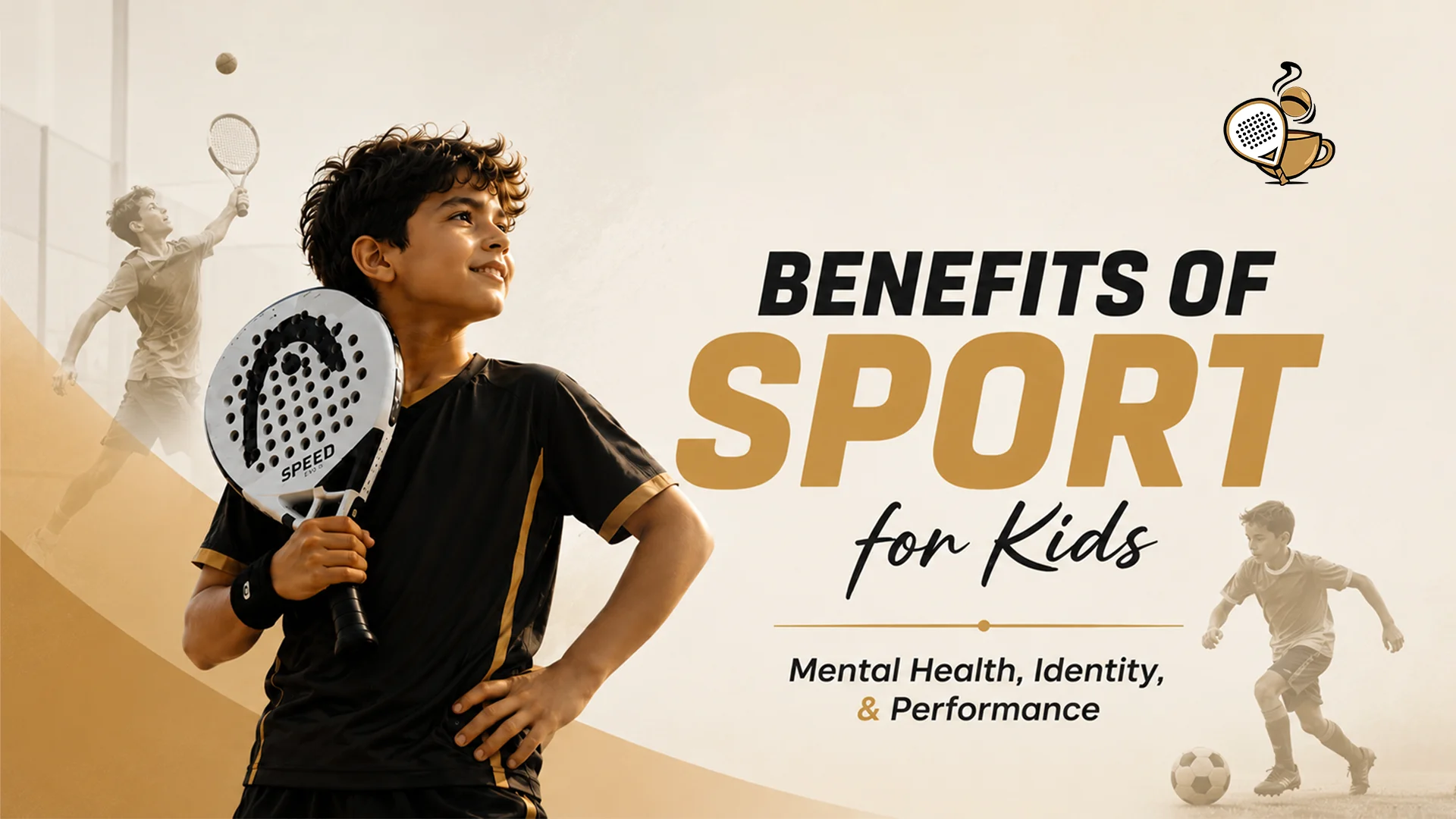
Imagine a child stepping onto a court, nervous, unsure, and hesitant. Thirty minutes later, that same child is laughing, moving confidently, and celebrating small wins. That’s the power of sport.
In today’s digital-first world, where screens often replace playgrounds, structured physical activities are more important than ever. Sports don’t just build strong bodies; they shape stronger minds, healthier identities, and better-performing individuals in school and life.
At Padel Cafe, this philosophy comes to life. Designed as more than just a sports venue, it blends fitness, fun, and community, creating the perfect environment for kids to grow through sport.
Why Sports Matter More Than Ever for Kids
Children today face increasing academic pressure, social comparison through social media, and reduced physical activity. Sports act as a natural counterbalance.
From boosting mental health to building resilience, sports provide a structured outlet where children can express themselves, fail safely, and grow consistently.
Whether it’s padel, badminton, pickleball, or basketball, each sport offers a unique pathway to development, helping kids discover who they are and what they’re capable of.
How Sports Impact Kids’ Development
| Area of Development | Key Benefits | Real-Life Impact |
| Mental Health | Reduces stress, anxiety, boosts mood | Happier, emotionally balanced children |
| Identity | Builds confidence and self-worth | Stronger self-image and independence |
| Academic Performance | Improves focus and memory | Better grades and classroom participation |
| Physical Health | Enhances strength, stamina, coordination | Active and healthier lifestyle |
| Social Skills | Encourages teamwork and communication | Better friendships and social confidence |
| Emotional Growth | Teaches resilience and discipline | Ability to handle success and failure |
Mental Health: The Hidden Superpower of Sports
Sports release endorphins (natural mood elevators) that reduce stress, anxiety, and symptoms of depression in children. Regular physical activity also improves sleep quality and emotional regulation, helping kids bounce back faster from daily disappointments.
1. Reducing Stress and Anxiety
Sports naturally release endorphins, the “feel-good” hormones that reduce stress and anxiety. For children dealing with school pressure or social challenges, even a short game can significantly improve mood.
At sports facilities, kids are encouraged to play in a relaxed, enjoyable environment that prioritizes fun over pressure.
2. Building Emotional Resilience
Losing a match, missing a shot, or facing competition teaches children how to cope with setbacks. These small experiences build emotional strength that carries into adulthood.
For example:
A child who loses a padel match learns to process disappointment and try again—an essential life skill.
3. Improving Focus and Cognitive Function
Physical activity improves blood flow to the brain, enhancing concentration, memory, and problem-solving skills.
Children who regularly engage in sports often perform better academically because their minds are sharper and more focused.
Identity Development: Finding “Who I Am”
Through sports, children discover their strengths, limitations, and what makes them unique; whether it is being a team leader, a strategic thinker, or a resilient fighter. This self-awareness builds a strong sense of identity that protects against peer pressure and low self-worth during the challenging teenage years.
1. Building Self-Confidence
When kids master a new skill, whether it’s hitting a clean shot in padel or scoring in basketball, they gain confidence in their abilities.
This confidence doesn’t stay on the court. It reflects in:
- Classroom participation
- Social interactions
- Decision-making
2. Creating a Sense of Belonging
Sports create communities. Kids feel like they’re part of something bigger; a team, a group, or a shared experience.
Padel is known for its social nature. It’s easy to learn and encourages interaction, making it ideal for children who may struggle to connect in other settings.
3. Encouraging Positive Identity Formation
Instead of identifying themselves through grades or social media, children begin to see themselves as:
- Athletes
- Team players
- Problem-solvers
This shift builds a healthier, more balanced self-image.
Performance: From the Court to the Classroom
The discipline required to practice a sport; showing up on time, following instructions, and persisting through failure; transfers directly to academic habits. Studies show that physically active children have better attention spans, memory retention, and classroom behavior, leading to measurable improvements in grades and test scores.
1. Discipline and Time Management
Balancing school and sports teaches kids how to manage time effectively.
They learn:
- When to study
- When to practice
- How to stay consistent
2. Goal Setting and Achievement
Sports naturally involve goals: winning matches, improving skills, or mastering techniques.
This goal-oriented mindset transfers to academics and future careers.
3. Enhanced Physical Health
Regular sports activity improves:
- Strength
- Coordination
- Stamina
- Flexibility
At Padel Cafe, premium courts and safe facilities ensure kids can play comfortably while developing physical fitness.
Social Skills: Learning Beyond Words
Sports teach children to read body language, celebrate teammates’ successes, and resolve conflicts without aggression, skills no textbook can fully convey. Whether it is a high-five after a good shot or a respectful handshake after a loss, these small interactions build the foundation for healthy friendships and future workplace relationships.
1. Communication and Teamwork
Team-based sports like basketball or doubles padel require constant communication.
Kids learn how to:
- Give instructions
- Support teammates
- Resolve conflicts
2. Respect and Sportsmanship
Winning teaches humility. Losing teaches grace.
Children learn to respect:
- Opponents
- Coaches
- Rules
These values shape their behavior outside sports as well.
Why Padel is Perfect for Kids
Padel is one of the fastest-growing sports globally, and for good reason.
- Easy to Learn
Unlike tennis, padel has a shorter learning curve. Kids can start enjoying the game quickly, which keeps them motivated.
- Safe and Controlled Environment
The enclosed court design reduces the chances of balls going out, making it easier and safer for beginners.
- Highly Social
Padel is typically played in doubles, encouraging interaction and teamwork.
Expanding Sports Options: More Than Just Padel
Recognizing the diverse interests of young players, Padel Cafe has expanded its offerings to include:
- Badminton – Great for agility and reflexes
- Pickleball – Easy, fun, and beginner-friendly
- Basketball – Builds teamwork and endurance
This variety allows kids to explore different sports and discover what they enjoy most—without being limited to a single activity.
Comparison of Sports Offered at Padel Cafe
| Sport | Best For | Skill Level | Key Benefits |
| Padel | Social kids, beginners | Easy to learn | Builds teamwork, confidence, and coordination |
| Badminton | Fast learners, active kids | Moderate | Improves reflexes, agility, and focus |
| Pickleball | Younger kids, beginners | Very easy | Fun, low-impact, boosts confidence quickly |
| Basketball | Energetic, team-oriented kids | Moderate to advanced | Enhances stamina, teamwork, and leadership |
Family Bonding Through Sports
One of the most underrated benefits of sports is family connection.
Parents and children can:
- Play together
- Watch games
- Share achievements
Facilities offer family-friendly booking options, making it easy to turn sports into a shared experience.
Real-Life Example: A Simple Transformation
Consider a child who spends most of their time on screens; low energy, low confidence, and minimal social interaction.
After joining regular sports sessions:
- They become more active
- Start making friends
- Show improved focus in school
This transformation isn’t rare; it’s what consistent sports participation does.
Long-Term Benefits That Last a Lifetime
The impact of sports doesn’t end in childhood. The habits, mindsets, and physical foundations developed on the court carry forward into adulthood. Here is how.
1. Physically Active as Adults
Children who develop a positive relationship with movement rarely become sedentary adults. They learn that exercise is not a chore—it is fun. Whether it is joining a corporate badminton league, playing weekend football with friends, or simply going for a run, these adults naturally prioritize physical activity.
According to a 2023 study in the Journal of Sport and Health Science, individuals who participated in organized sports as children are 35–40% more likely to meet adult physical activity guidelines compared to those who did not. Early habits become lifetime routines.
2. Sports-Trained Kids Handle Stress Better
Life is stressful; exams, job pressure, family responsibilities. Children who play sports learn early how to perform under pressure. A match point, a tiebreaker, a missed shot; these small stressors teach the brain to regulate emotions, control breathing, and focus on the next action.
Research from the American Psychological Association (APA) shows that physically active children have lower cortisol (stress hormone) levels and recover faster from stressful situations. As adults, they are less likely to experience burnout, anxiety, or emotional paralysis under pressure. They know how to breathe, reset, and try again.
3. Sports Build Strong Professional Skills
The workplace demands teamwork, communication, deadline management, and handling criticism. These are exactly what sports teach. A child who learns to pass the ball in football understands collaboration. A child who practices badminton repeatedly learns patience and discipline. A child who loses a match but shakes hands learns grace under failure.
According to a LinkedIn Workforce Confidence survey (2024), 78% of hiring managers value sports participation on a resume—not for athletic ability, but for the soft skills it signals. Leadership, resilience, time management, and coachability all transfer directly from the court to the office.
4. Active Children Maintain Healthier Relationships
Sports are social by nature. Even individual sports like tennis or badminton require opponents, coaches, and teammates in doubles formats. Children learn to read body language, celebrate others’ success, resolve conflicts without aggression, and communicate clearly under stress. These skills translate directly into friendships, romantic relationships, and parenting later in life.
A 2022 study from Harvard’s Making Caring Common project found that adolescents who participated in team sports reported higher levels of empathy and lower rates of social isolation. They know how to win without arrogance and lose without resentment—a rare and valuable relationship skill.
5. Sports Create Well-Rounded Individuals
The goal of youth sports is not to produce national champions. It is to produce confident, disciplined, socially capable, and physically literate human beings. Children who play sports are more likely to volunteer, finish higher education, and report higher life satisfaction in their 30s and 40s.
Sports teach the balance between effort and rest, between individual glory and team success, between chasing a goal and enjoying the journey. These are not athletic skills. These are life skills.
Bottom Line: Every hour your child spends on a court is an investment in their 25-year-old self, their 40-year-old career, and their 60-year-old health.
Creating the Right Environment Matters
Not all sports experiences are equal. A poorly run program with unsafe facilities, impatient coaches, or a toxic competitive culture can do more harm than good. Here is what a healthy sports environment looks like.
1. The Environment Must Be Safe
Safety goes beyond padding on walls and non-slip floors. Emotional safety matters equally. Children need to know that making a mistake will not result in yelling, humiliation, or punishment. A safe environment allows kids to try hard shots, fail, and try again without fear.
According to the Aspen Institute’s Project Play, emotional safety is the number one factor parents cite when choosing a sports program for young children (ages 5–10). At Padel Cafe, coaches are trained to correct technique without damaging confidence. Physical safety is ensured with clean courts, proper lighting, and first-aid availability.
2. The Environment Must Be Encouraging, Not Pressure-Filled
Children are not miniature professional athletes. They do not need win-at-all-costs coaching. They need encouragement—praise for effort, not just results; recognition for improvement, not just victories.
A 2024 study by the National Alliance for Youth Sports found that 70% of children who quit sports cited “not having fun” as the primary reason, and pressure from coaches or parents was the second most common factor.
Encouraging environments use phrases like “good try,” “you almost had it,” and “let’s drill that again” instead of “you lost because you were slow.” Padel Cafe maintains a low-pressure, high-encouragement culture suitable for beginners and developing players.
3. The Environment Must Be Well-Maintained and Professional
A cracked court, a sagging net, poor lighting, or dirty seating areas signal neglect. Children notice. Parents notice. A well-maintained facility shows respect for the players and the sport. It also prevents injuries. Uneven surfaces cause ankle sprains. Loose nets cause falls. Poor lighting causes mishits and eye strain.
According to the Pakistan Sports Board, a significant number of recreational sports injuries occur not from gameplay but from poor facility conditions. At Padel Cafe, courts are inspected daily, nets are measured weekly, and lighting is optimized for evening play. Clean changing areas and seating are part of the professional standard.
4. The Environment Must Be Socially Engaging
Children return to places where they have friends. A sports facility that encourages social interaction—between kids, between parents, and across age groups—builds loyalty and enjoyment. Socially engaging environments include:
- Group warm-ups and cool-downs
- Mixed doubles rotations so children play with different partners
- Parent seating areas that encourage conversation
- Small events like “bring a friend” days or end-of-month friendly matches
At Padel Cafe, the café area is intentionally designed for families to sit together, share snacks, and talk about the game. Children who feel socially connected are far less likely to quit.
5. The Right Environment Adapts to Different Ages and Skill Levels
A five-year-old beginner needs a different environment than a 14-year-old competitive player. The best facilities offer:
- Age-appropriate equipment (lighter rackets, softer balls, lower nets for young kids)
- Separate time slots for beginners vs. advanced players
- Flexible coaching styles — playful for young children, technical for older kids
- Clear progression paths so children see how they can improve without feeling rushed
Conclusion
Sports are not just about winning matches—they’re about building stronger, happier, and more confident kids.
From improving mental health to shaping identity and enhancing performance, the benefits are profound and long-lasting.
If you’re looking for a place where your child can grow, connect, and thrive, it’s time to step onto the court.
Give your child the gift of confidence, health, and happiness. Visit Padel Cafe today and let them experience the joy of padel, badminton, pickleball, and basketball firsthand.
Frequently Asked Questions
What is the best age for kids to start sports?
Kids can start as early as 4–5 years old with basic activities, gradually progressing to structured sports as they grow.
How do sports improve mental health in children?
Sports release endorphins, reduce stress, and help kids manage emotions through physical activity and social interaction.
Is padel suitable for beginners?
Yes, padel is easy to learn, making it ideal for beginners, especially children.
How often should kids play sports?
Ideally, kids should engage in physical activity at least 3–5 times a week for optimal health benefits.
Can sports improve academic performance?
Yes, regular physical activity enhances focus, memory, and cognitive function, leading to better academic results.
What if my child is not interested in sports?
Start with fun, low-pressure activities like pickleball or badminton to spark interest and gradually build engagement.
Are sports safe for kids?
Yes, when played in a supervised and well-maintained environment, sports are safe and highly beneficial for children.


0 Comments